About the project
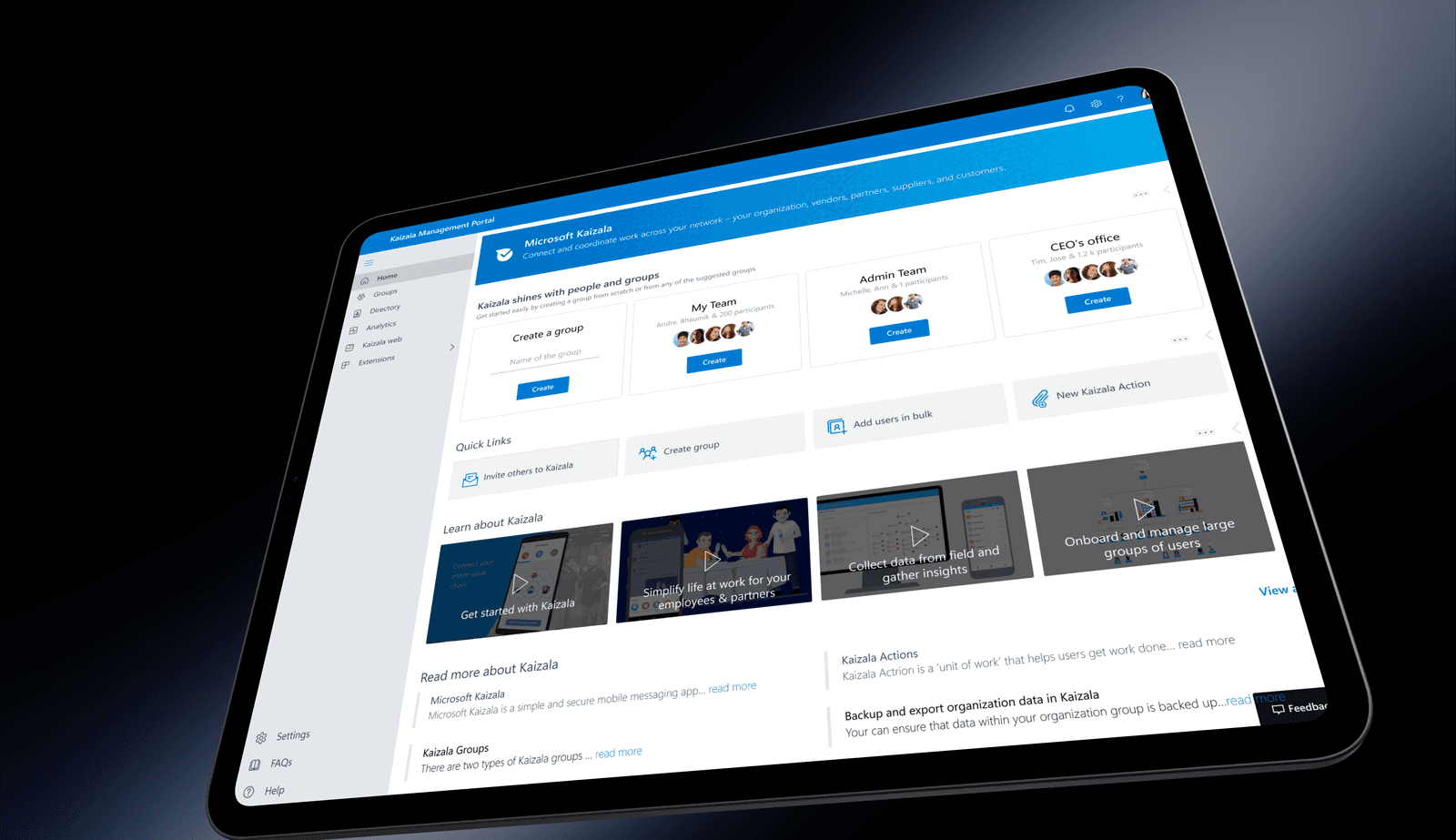
Microsoft Kaizala is a large-group communication platform designed to connect enterprise desk workers and frontline employees (fleet, on-street staff).
The Kaizala Management Portal served as the administrative backbone — enabling company admins to create communication groups, manage thousands of users, and drive adoption across their organizations.
(This product was retired in 2023 and key features including this were merged with Microsoft Teams)
While the mobile app was core to daily communication, the portal was the activation engine.
Challanges
Based on qualitative analysis after qualitiative research with admin users and quantitative analysis of user activity data, we’ve explored the possible problem areas to solve.
Despite strong enterprise acquisition, activation was failing.
-
High drop-offs immediately after first login
-
Less than 10% of potential groups were created relative to company size
-
Admins revisited only when reminded by account managers
-
Group creation required manual collation of email IDs
-
Activation required high-touch assistance from Microsoft teams
-
The product had acquisition momentum — but a leaky onboarding funnel.
The portal was functionally capable, but not optimized for enterprise scale behavior.
Stakes
This was not a cosmetic redesign.
Low group creation → low mobile downloads → low engagement → reduced enterprise stickiness. Ideally growth and adoption starts from the number of effective group creation at scale in larger organizations.
Without improving first-session activation:
-
Enterprise expansion would stall
-
Support costs would remain high
-
Account managers would continue compensating for product friction
-
Mobile app adoption would plateau
This was a growth problem disguised as a UI problem initially by the product managers at first.
My Role
Principal Product Designer leading:
-
End-to-end problem framing
-
User research with enterprise admins
-
UX strategy and solution definition
-
Cross-functional alignment with PM, engineering, and account teams
-
Rapid prototyping and validation with real users.
-
Shipped v1 within four weeks and iterated further for 8 weeks.
Design process
First goal was to approach this problem by Diagnosing the Drop-Offs.
So I combined:
Qualitative interviews with enterprise admins across industries with behavioral analytics on first-session flows. Also conducted Funnel analysis of group creation completion rates with product manager.
A pattern emerged:
-
7 out of 10 admins were creating groups based on existing email distribution lists.
-
Admins were not thinking in “chat groups.”
-
They were thinking in organizational structures that already existed.
-
The portal forced them to recreate structure manually. That friction was the drop-off.
Reframing the Homepage as a Growth Surface
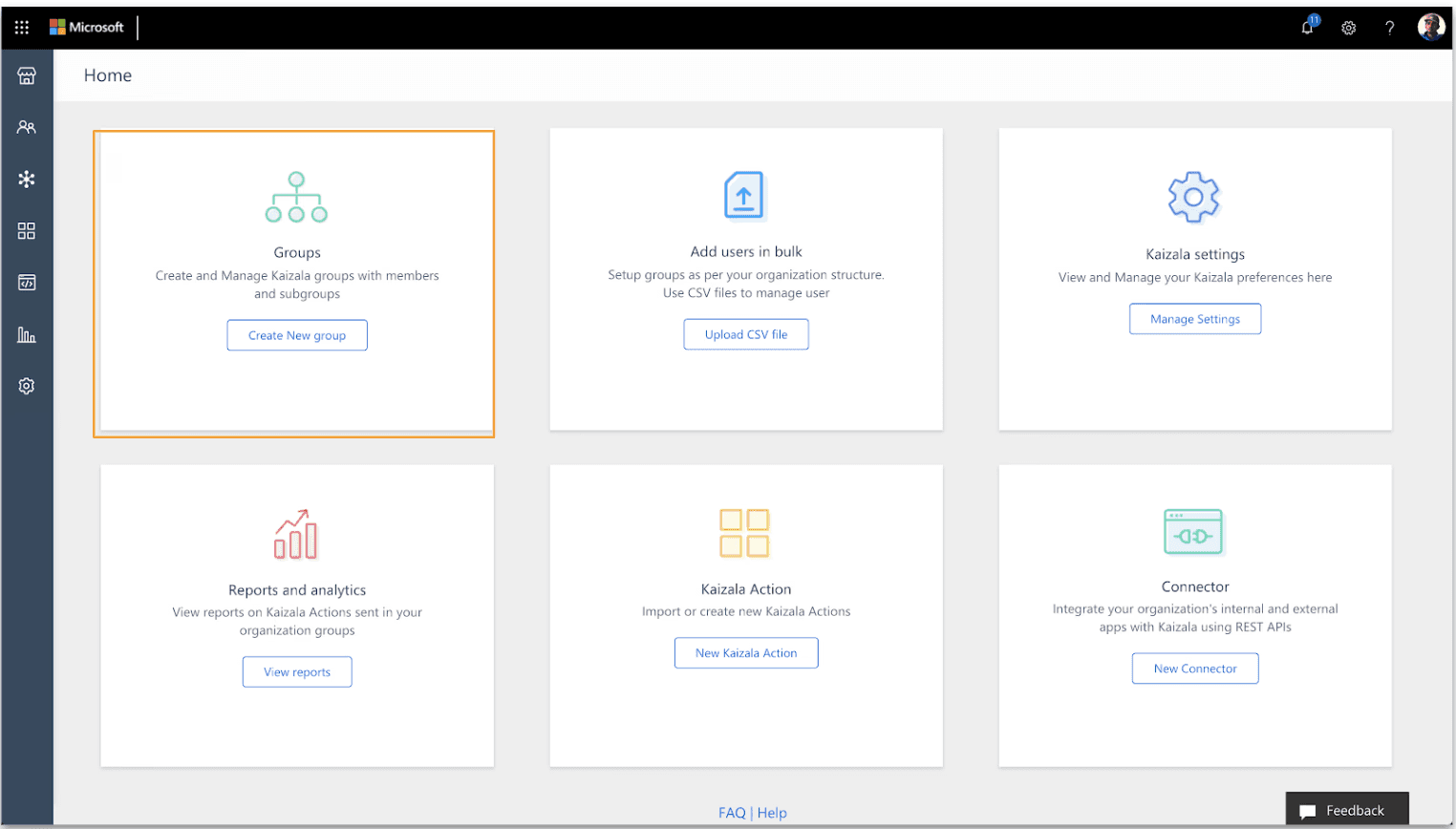
The original homepage functioned as a dashboard and showed their existing groups and CTA buttons to create groups on their own. It did not guide action.
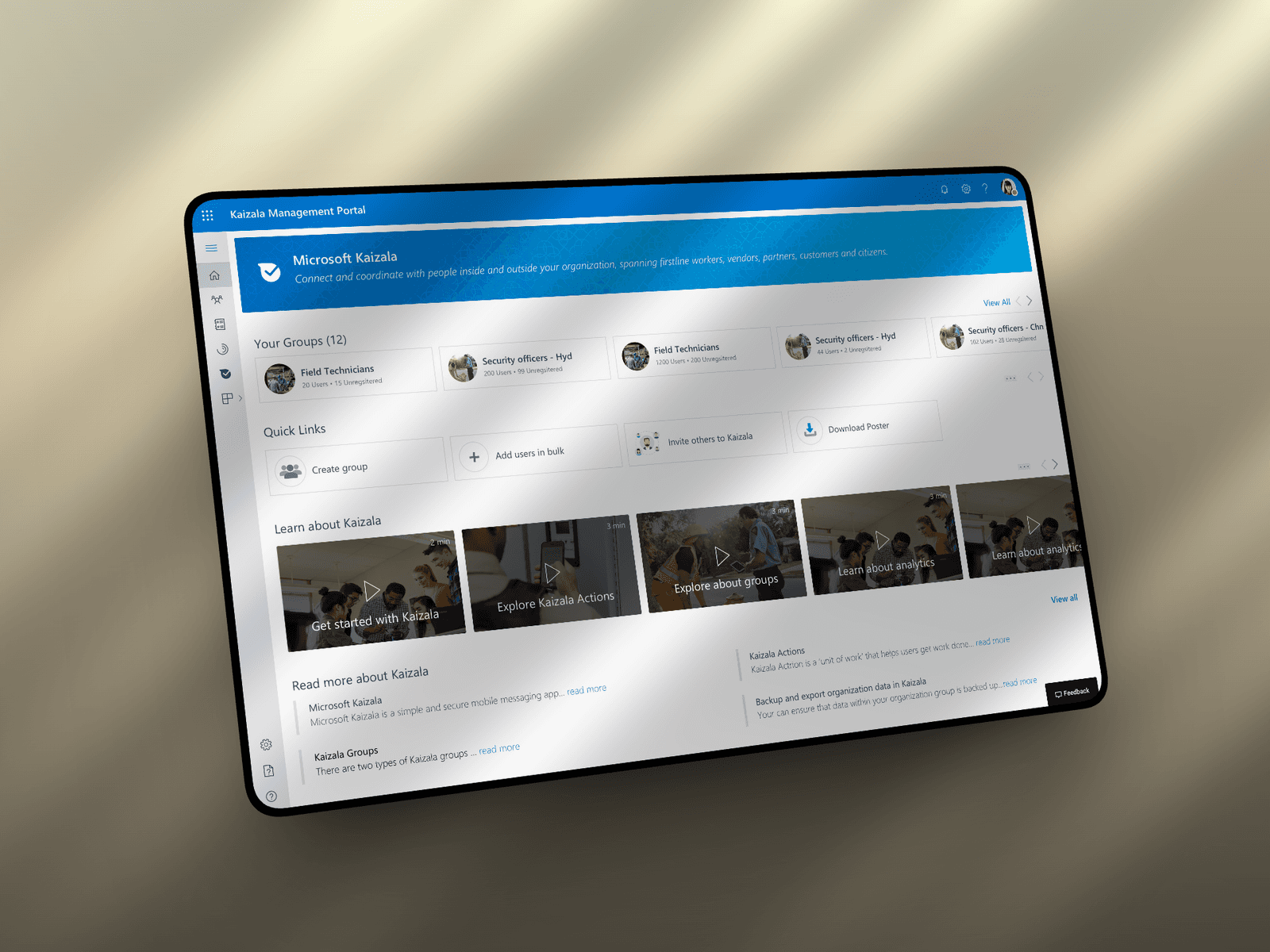
I reframed the homepage as:
-
An activation accelerator
-
A guided entry point for group creation
-
A contextual recommendation engine
Key design decisions
Tradeoff
Full org-wide one-click creation was highly requested but technically complex. We shipped DL-based bulk creation first by delivering most of the value with lower engineering effort. Then used adoption gains to justify deeper automation.
1. Converting Email DLs into Ready-Made Groups
Admins were manually:
-
Collecting email IDs
-
Creating groups from scratch
-
Repeating this for every team
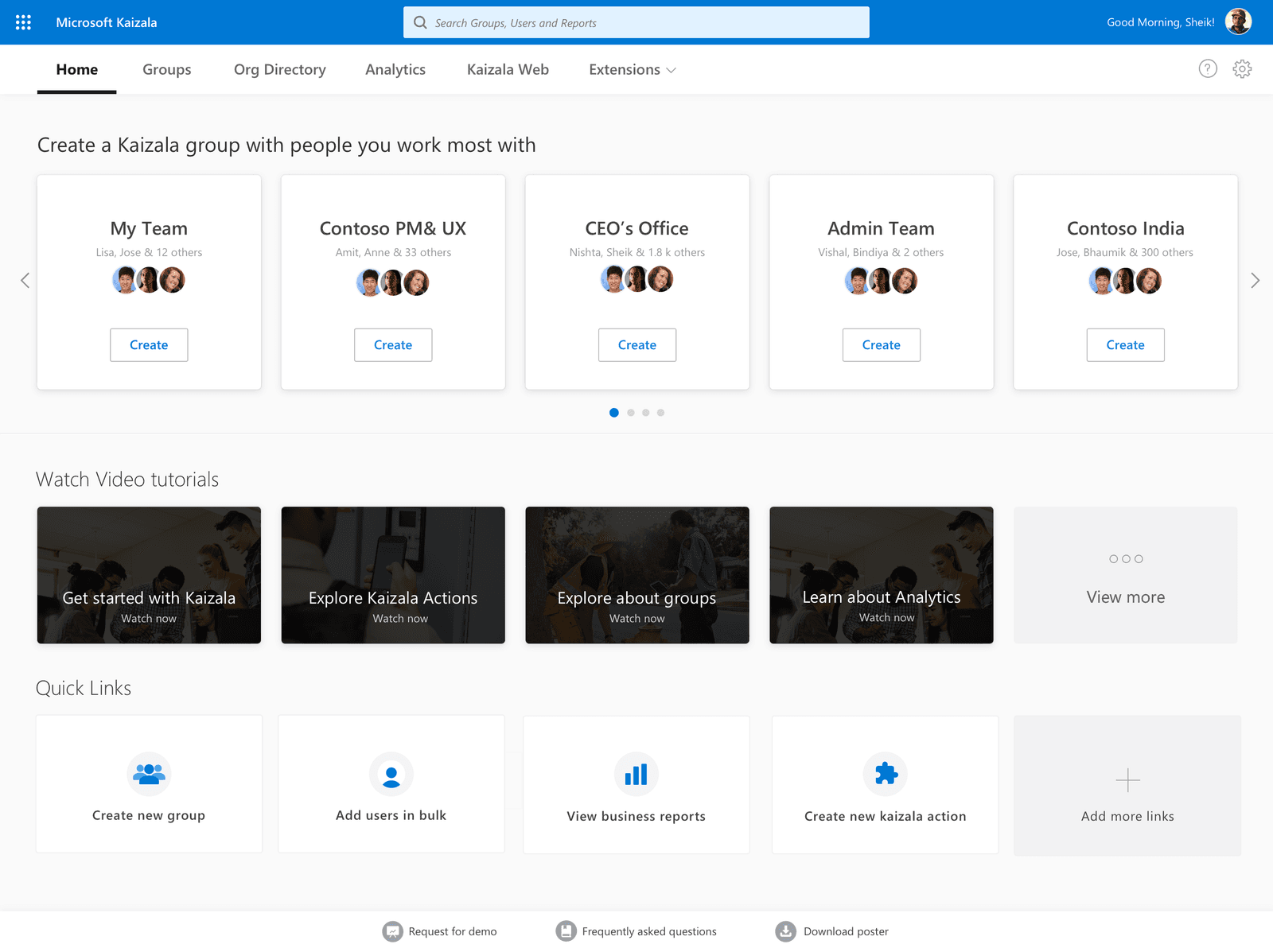
We surfaced Email Distribution Lists (DLs) as one-click, ready-to-convert group suggestions directly on the homepage.
Impact:
Removed spreadsheet prep, back-and-forth coordination, and manual member entry — significantly reducing setup time and cognitive load.
2. Prioritizing Familiarity Over Templates
We tested:
-
Purpose-Based Templates (Project Team, Regional Office, Leadership Group)
-
Auto-Surfaced DL Suggestions from the enterprise directory
User testing showed strong preference for DL-based suggestions. Templates required interpretation vs DLs matched existing organizational structure. We chose alignment with real-world workflows over abstraction.
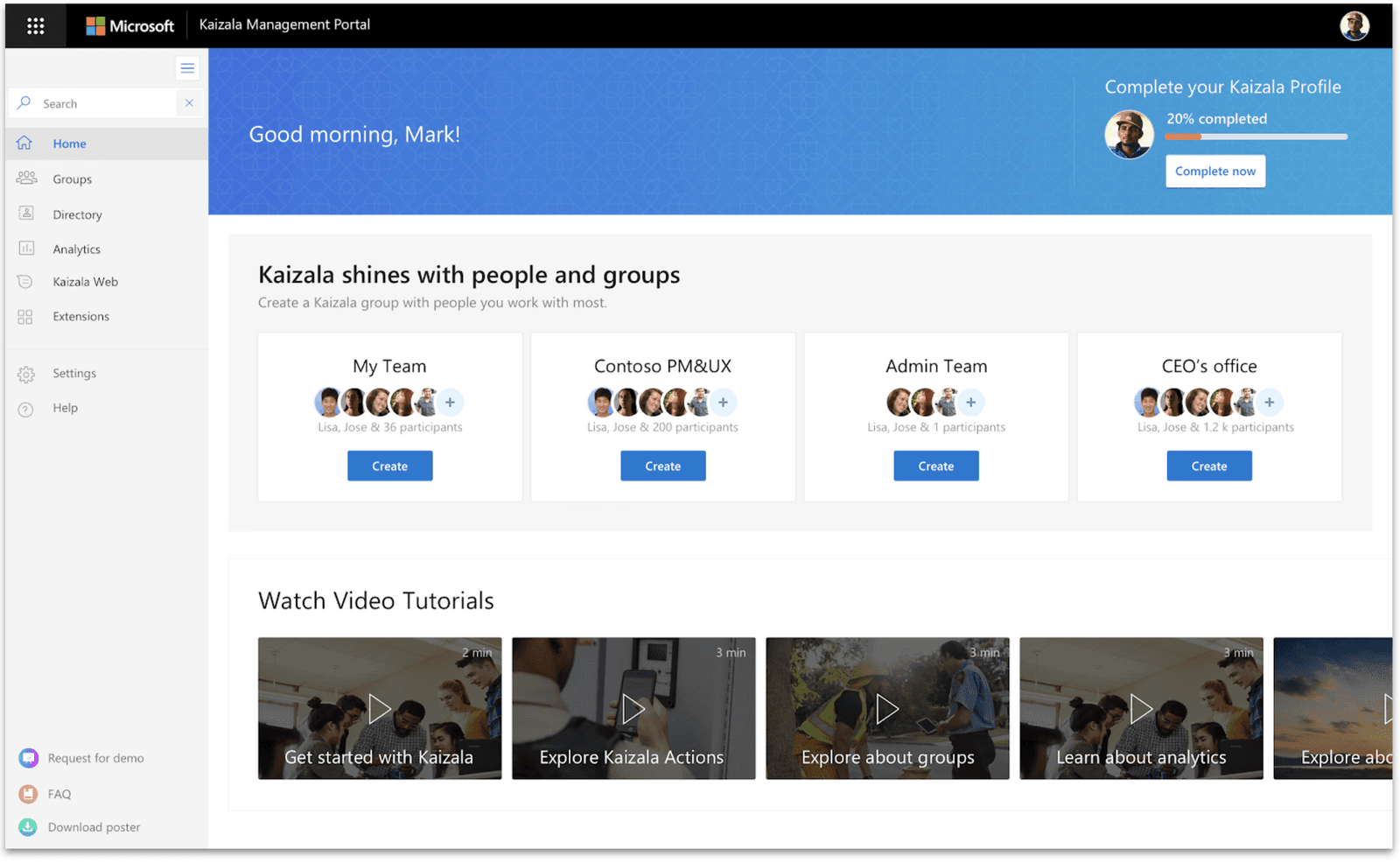
We streamlined bulk setup by enabling one-click DL group creation, clear success confirmations, and immediate prompts to create the next group. turning setup into a fast, repeatable loop instead of a manual, one-off task. At the same time, we reframed the homepage from a passive dashboard into an activation surface by surfacing adoption metrics, highlighting unregistered users, and nudging org setup completion. This shifted admin behavior from reactive logins to structured onboarding momentum.
Summary
This video to shows the product in action. Philippines airlines was one among our customers who benefitted well from this feature in creating bulk groups for their crews at scale within few days of onboarding.
Outcomes
This feature was conceptualized in 4 weeks and rolled out at scale within 8 weeks and continously iterated further based on the adoption. The key outcomes were
-
Lift in first-session group creation by 40%.
-
Increase in downstream mobile app downloads
-
Reduced dependency on account managers
-
We’ve achieved an Improved activation funnel completion.
Insight & Impact
Admins completed setup quickly but returned less often — activation improved, retention needed new value. This informed expansion into reporting and organizational analytics.
Overall, the initiative reduced onboarding friction, improved enterprise self-serve activation, and repositioned the homepage as a growth engine rather than a static dashboard.